


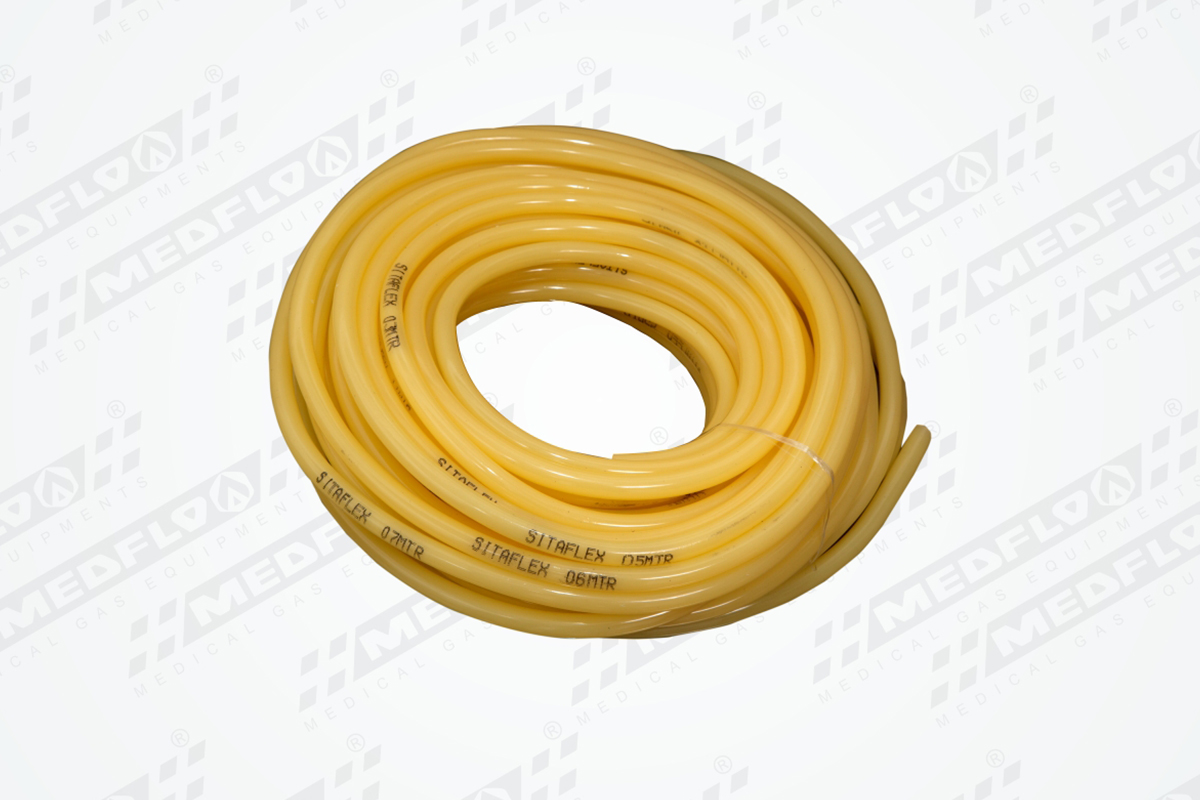
Nylon Hose
Nylon Hose Manufacturer for Medical Gas Pipeline Systems
Randall Medical Technologies is a leading manufacturer and supplier of Nylon Hose engineered specifically for medical gas pipeline systems used in hospitals, nursing homes, diagnostic centres, and ambulatory surgical facilities across India and international markets. Manufactured at our Coimbatore facility, our Nylon Hose combines a rugged, flexible construction with the corrosion resistance and pressure tolerance that medical gas installations demand — making it a trusted low-pressure tubing solution for connecting outlets, flowmeters, humidifiers, and bedside equipment to a hospital's central gas supply. Every batch is produced in line with recognised industry standards for hospital pipeline accessories, and our clients — ranging from independent nursing homes to multi-specialty hospital chains — rely on us for consistent quality at competitive, market-aligned pricing.
If your facility is sourcing tubing for an oxygen, medical air, nitrous oxide, or vacuum line, or your biomedical maintenance team needs replacement stock for an existing pipeline network, this page walks through what a medical-grade Nylon Hose is, how it differs from generic industrial hose, the standards it should meet, and why hospitals across South India specify Randall for this component.
What Is a Medical Gas Nylon Hose?
A Nylon Hose, in the context of hospital gas pipeline systems, is a flexible, low-pressure tube used to carry medical gases — oxygen, medical air, nitrous oxide, and vacuum/suction lines — over short, flexible runs where rigid copper pipe is impractical. Typical use cases include the connection between a wall-mounted or pendant-mounted gas outlet and a flowmeter, humidifier bottle, ventilator, anaesthesia workstation, or suction regulator. Because these connections are made and remade constantly as equipment is moved between beds, wards, and operating theatres, the hose needs to stay flexible and leak-tight through thousands of connection cycles without cracking, hardening, or losing its seal.
Nylon is chosen for this application because it holds its shape under repeated flexing, resists the oils, alcohols, and cleaning agents routinely used around hospital equipment, and performs reliably across the pressure ranges typical of low-pressure medical gas distribution. Unlike rubber tubing, which can perish, discolour, or stiffen with age and repeated sterilisation-area exposure, nylon retains its flexibility and clarity over a much longer service life — which is why it has become the default material for this class of hospital pipeline accessory.
Role of Nylon Hose in Hospital Gas Pipeline Systems
A hospital's medical gas pipeline system is only as reliable as its weakest connection point, and flexible hose sections are where the greatest number of connect/disconnect cycles happen. Randall's Nylon Hose is engineered to sit at exactly these stress points — between a gas outlet and the equipment it feeds — and to do so without introducing pressure drop, leaks, or particulate contamination into a system that is ultimately delivering gas to a patient.
In an operating theatre, Nylon Hose typically links the anaesthesia machine or ceiling pendant outlet to the gas supply, where any flex or vibration during a procedure must not compromise the seal. In general wards and ICUs, it connects bedside outlets to flowmeters and humidifier bottles supporting patients on supplemental oxygen. In recovery rooms and diagnostic suites, it supports portable equipment that needs to be repositioned frequently. Across all of these settings, the hose has to combine mechanical durability with the chemical inertness needed to avoid reacting with the gases it carries — a non-negotiable requirement in any medical gas installation.
Because it sits downstream of area valve service units and terminal outlets, Nylon Hose is also one of the most frequently inspected and replaced components during routine biomedical maintenance and NABH/JCI-oriented facility audits. Hospitals that standardise on a single, certified hose supplier — rather than sourcing ad hoc from general industrial hose vendors — find maintenance and replacement far more predictable, since fitting sizes, wall thickness, and pressure ratings stay consistent across the facility.
Material Properties and Engineering Standards
Randall's Nylon Hose is manufactured from high-quality nylon polymer sourced from reputable, certified vendors, and every production run is built to consistent wall-thickness and bore-diameter tolerances so that fitment with standard medical gas connectors, probes, and NIST/DISS adapters is reliable across every metre supplied. The finished hose is rust-resistant and corrosion-resistant by nature of the polymer used, and it is formulated to withstand sustained exposure to pressure, chemicals, alkalis, acids, and oils that are commonly present in a hospital's technical and sterilisation areas.
Key performance characteristics of our Nylon Hose include a smooth, low-friction internal bore that supports consistent gas flow without turbulence, an outer jacket that resists abrasion from routine handling and equipment movement, flexibility that holds up to repeated bending without kinking or work-hardening, and a working pressure rating suited to low-pressure medical gas distribution circuits. The hose is also resistant to UV degradation and does not become brittle with age at typical indoor hospital storage and operating temperatures, which extends its usable service life well beyond that of comparable rubber or unreinforced PVC tubing.
Randall manufactures Nylon Hose to specification, so facilities with particular bore diameter, wall thickness, colour-coding, or length requirements — including colour-coded runs aligned to gas-specific identification standards — can order to their exact pipeline design rather than adapting the installation to a generic off-the-shelf hose.
Applications Across Healthcare Settings
Operating theatres and anaesthesia workstations use Nylon Hose to connect ceiling pendants and wall outlets to anaesthesia machines, ventilators, and monitoring equipment, where flexibility and a secure seal under constant repositioning are essential. Intensive care units and high-dependency wards rely on it to link bedside gas outlets to flowmeters, humidifiers, and patient-side equipment that must stay connected reliably for extended periods. General wards and nursing stations use it for routine oxygen therapy setups feeding humidifier bottles and nasal cannula or mask circuits.
Diagnostic and procedure rooms, including endoscopy suites and cath labs, use Nylon Hose for portable and semi-portable equipment connections that need to be moved between procedures. Ambulatory and day-care surgical centres, nursing homes, and standalone diagnostic centres specify it for the same reasons larger hospitals do — dependable low-pressure gas delivery with minimal maintenance overhead. Vacuum and suction lines, including those feeding ward vacuum units, theatre suction trolleys, and portable suction regulators, also use nylon tubing for the flexible connection between the terminal outlet and the suction device.
Nylon Hose vs PVC and Rubber Tubing
Facilities evaluating tubing options for medical gas connections typically compare nylon against PVC and rubber alternatives, and each material trades off differently. Rubber tubing is inexpensive and widely available, but it tends to perish, discolour, and stiffen with age and repeated exposure to disinfectants and ambient heat, which shortens its practical service life in a hospital setting and increases the frequency of replacement. Unreinforced PVC tubing is flexible when new but can become brittle over time, is more prone to kinking under tight bend radii, and generally offers lower chemical resistance than nylon when exposed to oils, alcohols, and cleaning agents.
Nylon strikes a more favourable balance for this specific application: it retains flexibility over a longer service life, resists the chemicals and oils commonly found around hospital equipment, holds a consistent bore shape under repeated bending, and maintains a secure, leak-resistant seal at fitting connections through thousands of connect-disconnect cycles. For facilities running high patient turnover — ICUs, operating theatres, and busy general wards — this translates directly into fewer unplanned replacements, less risk of an undetected leak at a hose connection, and lower total cost of ownership over the pipeline's operating life, even though the upfront per-metre cost of nylon can run slightly higher than basic rubber tubing.
Why Choose Randall Medical Technologies
Randall Medical Technologies is a Coimbatore-based manufacturer with a reputation built among doctors, hospital administrators, and biomedical engineering teams across South India. We manufacture our Nylon Hose in-house rather than trading imported or third-party stock, which means we control material sourcing, wall-thickness consistency, and batch-to-batch quality directly — and it means we can accommodate custom lengths, diameters, and fitment specifications without routing every request through an external supplier.
Our product range extends across the full medical gas pipeline ecosystem — single arm and rigid pendants, ICU beds and medical cots, bed head panels, medical gas outlets in multiple international standards, AGSS gas outlets, NIST connectors, high-pressure tubes, copper pipes and fittings, area valve boxes, and alarm and control panels — so hospitals sourcing Nylon Hose from Randall can standardise their entire gas pipeline installation with a single accountable manufacturer rather than coordinating between multiple vendors for interconnected components. This is a meaningful advantage during both new installations and retrofits, where mismatched components between suppliers are a common source of maintenance headaches.
Every product leaves our facility with clear technical support available by phone and email, and our team works directly with hospital procurement and biomedical engineering staff to confirm bore size, length, and fitting compatibility before dispatch — reducing the risk of ordering errors on a component that is otherwise inexpensive to correct.
Manufacturing Process and Quality Assurance
Raw nylon polymer is sourced from vetted, certified vendors and inspected on arrival before it enters production. Extrusion is controlled for consistent wall thickness and bore diameter across each production run, which is what ultimately determines how reliably the finished hose seats onto a given fitting or probe. Finished hose is checked for surface finish, flexibility, and dimensional consistency before packing, and batches are traceable back to their production run, which matters for hospitals maintaining biomedical equipment records as part of accreditation requirements.
Because Nylon Hose is a component that directly touches a hospital's gas delivery pathway, we treat dimensional consistency and material integrity as non-negotiable rather than cosmetic quality points — a hose that is a fraction of a millimetre out of tolerance on bore diameter can mean a loose, leak-prone fit at the outlet end, which is the last thing any facility wants on a gas line feeding patient care equipment.
Installation and Maintenance Guidance
Nylon Hose should be cut cleanly and squarely before fitting to ensure a full, even seal at the connector — a ragged or angled cut is one of the most common causes of a slow leak at a hose-to-fitting joint. Bend radius should stay within the hose's rated flexibility limits; forcing a tight bend at a fitting shortens the hose's working life and increases the chance of kinking under repeated movement. Hose runs should be inspected periodically as part of routine biomedical maintenance for surface cracking, discolouration, or softening, particularly at points where the hose flexes most frequently or sits close to heat sources.
Facilities running scheduled maintenance and NABH or JCI-oriented compliance checks typically include flexible gas hose sections in their periodic inspection checklist precisely because these are wear components rather than fixed infrastructure. Keeping a standardised stock of Randall Nylon Hose on hand — matched to the exact bore and fitting specification used across the facility — makes routine replacement a same-day task for the maintenance team rather than a procurement delay.
Choosing the Right Nylon Hose for Your Facility
When specifying Nylon Hose for a new installation or a maintenance stock order, the details that matter most are the required bore diameter and wall thickness to match your existing outlets and fittings, the gas service the hose will carry (oxygen, medical air, nitrous oxide, or vacuum), the working pressure of that specific circuit, and the length needed per run. Colour coding aligned to the gas being carried is also worth specifying at order stage, since it supports faster visual verification during maintenance and reduces the chance of a misconnection.
Randall's team can confirm all of these specifications against your existing pipeline design before manufacturing, and we supply both standard stock lengths and hose cut to custom specification for facilities with non-standard outlet configurations or retrofit requirements.
Frequently Asked Questions
What is medical gas Nylon Hose used for?
It is used as flexible, low-pressure tubing that connects medical gas outlets, flowmeters, humidifiers, and gas-powered equipment within a hospital's pipeline system, commonly in operating theatres, ICUs, wards, and diagnostic areas.
How is Nylon Hose different from PVC or rubber tubing?
Nylon holds its flexibility and shape over a longer service life, resists oils, chemicals, and acids more effectively, and maintains a more reliable seal at fittings through repeated connect-disconnect cycles than typical rubber or unreinforced PVC alternatives.
Can Randall manufacture custom lengths or diameters?
Yes. Randall manufactures Nylon Hose to specification, including custom bore diameters, wall thickness, and cut lengths, to match a facility's existing pipeline design or a new installation's requirements.
What gases is this hose rated for?
Randall's Nylon Hose is used across low-pressure medical gas services including oxygen, medical air, nitrous oxide, and vacuum/suction lines. Facilities should confirm working pressure against their specific circuit design before ordering.
How often should Nylon Hose be replaced?
There is no fixed universal interval — replacement should follow your facility's biomedical maintenance schedule, with hose inspected for cracking, discolouration, or softening during routine checks and replaced as part of scheduled preventive maintenance or immediately if wear is visible.
Does Randall supply other medical gas pipeline components alongside Nylon Hose?
Yes. Randall manufactures the full range of medical gas pipeline accessories — outlets, NIST connectors, pendants, area valve boxes, copper pipes and fittings, alarm systems, and control panels — allowing facilities to standardise an entire installation with one manufacturer.
Get in Touch
Randall Medical Technologies Private Limited manufactures Nylon Hose and the full range of medical gas pipeline accessories from our facility in Coimbatore, Tamil Nadu, supplying hospitals, nursing homes, and diagnostic centres across South India and beyond. For bore diameter compatibility, bulk pricing, or custom-length orders, contact our team at info@randall.care or +91 99445 33888, or request our full product catalogue for your procurement or biomedical engineering review.