


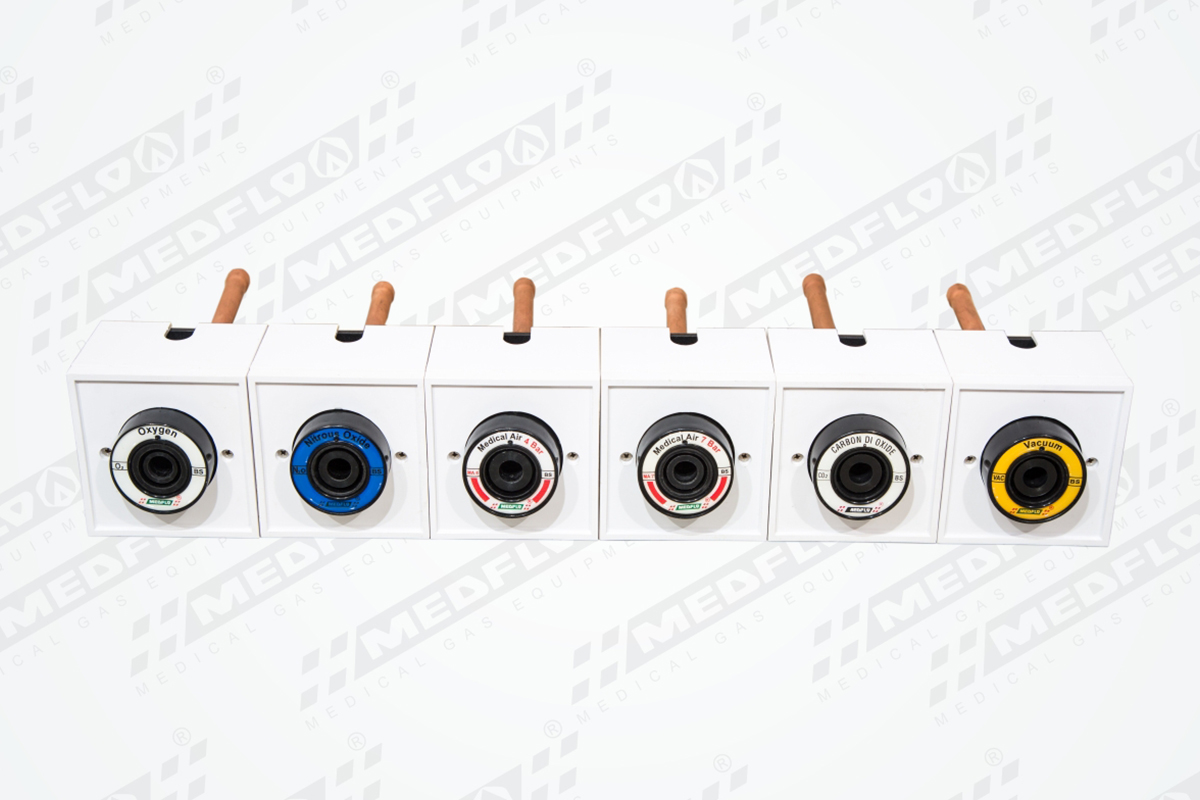
British Standard Medical Gas Outlets
British Standard Medical Gas Outlets
Randall Medical Technologies manufactures and supplies British Standard Medical Gas Outlets for hospitals, intensive care units, operation theatres, emergency departments, nursing homes and other healthcare facilities. Our medical gas terminal units are designed to provide a reliable point-of-use connection between the hospital medical gas pipeline system and medical equipment.
A medical gas outlet, also known as a medical gas terminal unit, is an important component of a medical gas pipeline system (MGPS). It provides the connection point through which medical gases such as oxygen, medical air, nitrous oxide and vacuum can be delivered to patient care areas and medical equipment.
Randall Medical Technologies is based in Coimbatore, Tamil Nadu, India, and supplies medical gas outlets and related medical gas pipeline products for hospitals, healthcare projects, medical gas contractors, biomedical engineering teams, MEP consultants and healthcare equipment suppliers across India and international markets.
What Is a British Standard Medical Gas Outlet?
A British Standard Medical Gas Outlet is a gas-specific terminal unit used at the point of use in a medical gas pipeline system where a compatible medical gas probe, hose or connection is required. The outlet provides a controlled connection between the medical gas pipeline and the equipment or service point.
Medical gas outlets are different from ordinary industrial gas connections because healthcare applications require careful identification and compatibility of individual gas services. Oxygen, medical air, vacuum and other medical gases have different clinical applications and therefore require the appropriate gas-specific terminal connection.
British Standard medical gas outlets can be specified for different hospital areas depending on the medical gas pipeline design, room function, equipment requirements and applicable project standards.
Medical Gas Terminal Unit for Hospital Applications
The medical gas terminal unit is normally installed at the point where healthcare professionals need access to a medical gas service. Depending on the hospital design, the outlet may be installed on a wall, bed head panel, medical pendant or another suitable medical gas delivery system.
The correct outlet should always be selected according to the required gas service, connection standard, installation arrangement and compatibility with the complete medical gas pipeline system.
British Standard Medical Gas Outlet Manufacturer in India
Randall Medical Technologies is a medical gas outlet manufacturer in India, located in Coimbatore, Tamil Nadu. We manufacture and supply medical gas terminal units and related medical gas pipeline products for healthcare infrastructure projects.
Our product range includes British Standard medical gas outlets as well as other medical gas outlet configurations and hospital equipment. This allows hospitals, medical gas contractors and healthcare project procurement teams to source multiple products required for medical gas pipeline installations.
We support customers with product information, technical details, specifications and quotation requirements based on the application and project configuration.
Medical Gas Outlet Supplier for Hospital Projects
Our British Standard medical gas outlets can be considered for new hospital construction, healthcare infrastructure projects, hospital renovation, medical gas pipeline upgrades and replacement of existing terminal units.
Before selecting a medical gas outlet, the project team should confirm the gas service, outlet standard, compatible probe or adapter, pipeline connection and installation location.
BS EN ISO 9170-1 Medical Gas Outlets
Medical gas terminal units are covered by international and national requirements governing terminal units used in medical gas pipeline systems. BS EN ISO 9170-1 is an important reference for terminal units used with medical gas pipeline systems.
For a hospital project, the applicable standard should be confirmed from the project specification, medical gas pipeline design and requirements provided by the consultant or responsible authority.
Where a British Standard type medical gas outlet is specified, the outlet, compatible probe or adapter and medical gas pipeline system should be selected as a compatible combination. This is particularly important for safety-critical healthcare applications.
BS Type Medical Gas Outlet
A BS-type medical gas outlet is designed around a specific connection arrangement intended for the corresponding medical gas service. The correct connection helps ensure that the appropriate medical gas equipment can be connected to the intended terminal point.
Customers requiring British Standard medical gas outlets should provide the required gas type, outlet configuration and project specification so that the appropriate product can be supplied.
Gas-Specific Medical Gas Connections
One of the most important characteristics of a medical gas outlet is gas-specific connection. A hospital medical gas pipeline system may distribute several different services throughout the facility, and each service has a specific purpose.
Common medical gas services include:
- Medical Oxygen (O2)
- Medical Air
- Medical Vacuum
- Nitrous Oxide (N2O)
- Other medical gas services according to the project specification
The correct gas-specific outlet should be used for the corresponding pipeline service. Gas identification and compatible connections are important considerations when designing and installing medical gas pipeline systems.
Why Gas-Specific Medical Gas Outlets Are Important
Medical gases have different clinical functions. For example, oxygen is used for patient respiratory support, medical air is used for various medical and respiratory applications, and vacuum is used for suction applications.
Because these services have different purposes, medical gas outlets are designed with gas-specific connection arrangements. This helps reduce the risk of an incompatible connection being made between medical equipment and the wrong gas service.
For this reason, hospitals and medical gas pipeline contractors should select terminal units based on the approved project specification rather than selecting an outlet based only on its appearance or physical dimensions.
British Standard Medical Gas Outlets for Hospitals
British Standard medical gas outlets for hospitals can be used in a wide range of healthcare environments where a suitable point-of-use medical gas connection is required.
Typical applications include:
- Multi-speciality hospitals
- Intensive Care Units (ICU)
- Operation Theatres
- Emergency departments
- Recovery rooms
- General wards
- Patient rooms
- Procedure rooms
- Nursing homes
- Clinics and medical centres
- Specialized treatment areas
- Healthcare infrastructure projects
The number and type of medical gas outlets required in each area depend on the room function, bed configuration, medical equipment requirements and medical gas pipeline design.
Medical Gas Outlet for ICU and Critical Care Areas
Intensive Care Units require convenient access to medical gas services because critical-care patients may require oxygen, medical air and vacuum services as part of their clinical treatment and equipment setup.
A medical gas outlet for ICU can be incorporated into wall-mounted systems, bed head panels or other suitable medical gas delivery equipment depending on the room design.
ICU Medical Gas Outlet Selection
When specifying a medical gas outlet for an ICU, the project team should consider:
- Required medical gas service
- Medical gas outlet standard
- Compatible probe or adapter
- Pipeline connection
- Mounting arrangement
- Number of outlets required per bed
- Compatibility with the medical gas pipeline system
- Applicable project and installation requirements
These details help ensure that the selected terminal unit matches the intended hospital application.
Medical Gas Outlet for Operation Theatres
Operation theatres commonly require multiple medical gas services at convenient locations around the surgical environment. Depending on the theatre design, medical gas outlets may be incorporated into medical pendants, ceiling service units, wall systems or other medical gas delivery equipment.
A British Standard medical gas outlet for operation theatre applications can provide the required point-of-use connection where a BS-type terminal unit is specified by the project.
Medical Gas Services in Operation Theatres
Depending on the medical gas pipeline design, operation theatre installations may require services such as:
- Medical Oxygen
- Medical Air
- Medical Vacuum
- Nitrous Oxide
- Other specified medical gas services
The final configuration should be determined according to the approved medical gas pipeline layout and the requirements of the healthcare facility.
British Standard Medical Gas Outlets for Bed Head Panels
Medical gas outlets can be integrated into hospital bed head panels to provide convenient access to medical gas services near the patient bed.
A bed head panel may combine several patient-care services in one unit, including:
- Medical gas outlets
- Electrical sockets
- Nurse call systems
- Data connections
- Lighting
- Other hospital infrastructure services
The configuration of a bed head panel depends on the hospital room design, number of beds, medical equipment requirements and project specifications.
Randall Medical Technologies also manufactures bed head panels and related hospital equipment, allowing healthcare projects to coordinate medical gas outlet requirements with other patient-care infrastructure.
Wall Mounted British Standard Medical Gas Outlets
Wall mounted medical gas outlets are suitable for applications where the medical gas terminal needs to be positioned directly on a wall or suitable wall-mounted medical service system.
Wall-mounted outlets may be considered for patient rooms, hospital wards, treatment areas, recovery rooms and other healthcare environments where a wall-based medical gas connection is appropriate.
The mounting arrangement and connection configuration should be selected according to the medical gas pipeline design and the requirements of the particular healthcare project.
British Standard Medical Gas Outlets for Medical Pendants
Medical pendants provide medical gas, electrical and other services close to patients or surgical working areas. Depending on the product design and project specification, medical gas outlets can be integrated into suitable medical pendant configurations.
Randall Medical Technologies manufactures different medical pendant solutions, including:
- Single Arm Pendants
- Double Arm Pendants
- Rigid Pendants
British Standard medical gas outlets can be considered as part of a medical pendant system when the project requires a compatible BS-type medical gas terminal connection.
Features of British Standard Medical Gas Outlets
Our British Standard medical gas outlets are designed for healthcare applications where reliable point-of-use medical gas connections are required.
Key Product Features
- British Standard type medical gas connection
- Gas-specific connection arrangement
- Suitable for medical gas pipeline system applications
- Designed for hospital and healthcare environments
- Available for different medical gas services
- Suitable for specified wall-mounted applications
- Can be incorporated into suitable bed head panel configurations
- Can be incorporated into compatible medical pendant systems
- Suitable for new installations and replacement applications
- Product information and technical specifications available on request
The exact outlet configuration, gas type, connection arrangement and installation method should be selected according to the approved project specification.
Medical Gas Terminal Units for Different Healthcare Applications
Medical gas terminal units are used at the point of care throughout healthcare facilities. Different departments may have different requirements depending on the type of patient care and medical equipment used in that area.
Hospital Wards
Hospital wards may require medical gas outlets near patient beds for oxygen, medical air or vacuum services according to the medical gas schedule and room requirements.
Emergency Departments
Emergency and treatment areas may require convenient access to medical gas services for patient assessment, stabilization and treatment equipment.
Recovery Rooms
Recovery areas may require medical gas terminal units to support patient monitoring and respiratory care equipment according to the facility design.
Nursing Homes
Nursing homes and long-term care facilities may require medical gas outlets depending on the level of clinical care and the medical gas infrastructure specified for the facility.
Medical Gas Outlet Manufacturer in Coimbatore
Randall Medical Technologies is a medical gas outlet manufacturer based in Coimbatore, Tamil Nadu, India. We manufacture and supply medical gas pipeline products and hospital equipment for healthcare infrastructure projects.
Our location in Coimbatore enables us to support customers in Tamil Nadu, South India and other regions of India with medical gas outlets and related products.
Our Medical Gas Pipeline Product Range
Our product portfolio includes a range of medical gas pipeline and hospital infrastructure products such as:
- British Standard Medical Gas Outlets
- Medical Gas Outlets
- Medgas Outlets
- JPN Outlets
- AGSS Gas Outlets
- NIST Connectors
- Area Valve Boxes
- Medical Gas Alarm Systems
- Bed Head Panels
- Medical Pendants
- ICU Beds and Medical Cots
- Medical Gas Pipeline Accessories
- Copper Pipes and Fittings
This product range allows hospitals and medical gas contractors to coordinate different requirements associated with medical gas pipeline and healthcare infrastructure projects.
British Standard Medical Gas Outlet Supplier Across India
Randall Medical Technologies supplies medical gas outlets for healthcare projects across India. We work with hospitals, hospital contractors, medical gas pipeline contractors, biomedical engineers, MEP consultants, healthcare equipment dealers and procurement teams.
Customers searching for a British Standard medical gas outlet supplier in India can contact our team for product information, specifications, availability and quotation requirements.
Medical Gas Outlet Supplier for New Hospital Projects
For new hospital projects, medical gas outlets should be selected during the medical gas pipeline planning stage. The outlet standard, gas service, mounting configuration and connection requirements should match the approved medical gas pipeline design.
Our team can provide product information to help project teams review the appropriate medical gas outlet configuration for their application.
British Standard Medical Gas Outlet for Replacement Applications
Medical gas terminal units may eventually require replacement because of wear, damage, renovation or changes to the hospital infrastructure.
When replacing an existing medical gas outlet, it is important to identify the existing outlet standard and gas service before ordering a replacement product.
Information Required for Medical Gas Outlet Replacement
- Existing medical gas outlet type
- Medical gas service
- Outlet standard
- Compatible probe or adapter
- Pipeline connection
- Mounting arrangement
- Required quantity
- Existing system configuration
Providing these details helps the supplier understand the existing installation and recommend a suitable product configuration.
How to Select the Right British Standard Medical Gas Outlet
Selecting the correct medical gas outlet requires more than choosing a product based on its appearance. The outlet should be compatible with the medical gas service, pipeline system, connection standard and intended installation location.
Important Selection Factors
- Medical Gas Type: Identify whether the outlet is required for oxygen, medical air, vacuum, nitrous oxide or another specified service.
- Outlet Standard: Confirm whether the project requires a British Standard or another specified medical gas outlet standard.
- Installation Location: Determine whether the outlet will be installed on a wall, bed head panel, medical pendant or another suitable system.
- Connection Type: Confirm the required connection arrangement and compatible probe or adapter.
- Pipeline Connection: Verify the required pipeline connection according to the project design.
- Quantity: Confirm the number of outlets required for each room, bed or department.
- Project Specification: Ensure that the selected outlet matches the applicable hospital project requirements.
Medical Gas Outlet Installation Considerations
Medical gas outlets form part of a larger medical gas pipeline system. Installation should therefore be carried out by appropriately qualified and authorized professionals in accordance with the applicable project requirements and installation procedures.
The medical gas outlet should be correctly identified and connected to the intended medical gas service. The completed installation should be inspected and tested according to the applicable medical gas pipeline procedures before being placed into service.
Medical Gas Pipeline Compatibility
The terminal unit should be compatible with the medical gas pipeline system and the specified connection arrangement. Incorrect selection or installation of a medical gas outlet can affect the performance and safety of the medical gas delivery system.
For this reason, hospital engineering teams and medical gas contractors should verify the product specification before installation.
Quality and Reliability of Medical Gas Terminal Units
Medical gas outlets are installed in safety-critical healthcare environments where dependable operation and correct gas identification are important.
Randall Medical Technologies focuses on product construction, connection compatibility and application requirements when manufacturing and supplying medical gas terminal units.
For healthcare projects, product selection should always be based on the applicable medical gas pipeline standard, required gas service, installation location and approved project specification.
Maintenance of Medical Gas Outlets
Medical gas outlets are part of the hospital medical gas pipeline infrastructure and should be inspected and maintained according to the healthcare facility's maintenance procedures and applicable requirements.
Routine inspection may include checking the condition of the outlet, connection components, identification and general functionality. Any maintenance or repair involving the medical gas pipeline system should be performed by appropriately qualified personnel.
Medical Gas Outlet Inspection
During inspection or replacement planning, the following details may be reviewed:
- Gas identification
- Physical condition of the outlet
- Connection condition
- Compatible probe or adapter
- Mounting condition
- Pipeline connection
- Signs of damage or abnormal operation
Any issue identified during inspection should be addressed according to the hospital's approved maintenance and medical gas management procedures.
Applications of British Standard Medical Gas Outlets
British Standard medical gas outlets can be specified for a variety of healthcare and medical infrastructure applications.
- Hospitals
- Multi-speciality hospitals
- Government hospitals
- Private hospitals
- Intensive Care Units
- Operation Theatres
- Emergency Departments
- Recovery Rooms
- Patient Wards
- Patient Rooms
- Nursing Homes
- Clinics
- Medical Centres
- Healthcare Infrastructure Projects
- Hospital Renovation Projects
- Medical Gas Pipeline Upgrade Projects
Why Choose Randall Medical Technologies?
Randall Medical Technologies provides medical gas outlets and hospital equipment for healthcare infrastructure requirements. Our product portfolio covers medical gas terminal units, medical gas pipeline accessories and other hospital equipment.
Our Advantages
- Medical gas outlet manufacturing and supply
- Based in Coimbatore, Tamil Nadu, India
- Products for hospital medical gas pipeline applications
- Multiple medical gas outlet configurations
- Support for hospital and healthcare infrastructure projects
- Product information and technical assistance
- Supply support for customers across India
Our team works with hospitals, contractors, consultants and healthcare equipment suppliers to understand the required application and provide suitable product information.
British Standard Medical Gas Outlet Manufacturer and Supplier
Randall Medical Technologies is a British Standard medical gas outlet manufacturer and supplier in India, providing medical gas terminal units for hospitals and healthcare infrastructure projects.
Whether you require medical gas outlets for a new hospital, ICU, operation theatre, bed head panel, medical pendant or replacement application, the required gas service, outlet standard and installation configuration should be confirmed before ordering.
Our team can assist customers looking for British Standard medical gas outlets, BS medical gas outlets, medical gas terminal units and medical gas pipeline products.
Request a British Standard Medical Gas Outlet Quotation
If you are looking for a British Standard medical gas outlet manufacturer in India, contact Randall Medical Technologies for product information and quotation requirements.
To help us understand your requirement, you can provide the following information:
- Required medical gas type
- Required quantity
- Outlet standard
- Installation location
- Required connection type
- Hospital or project application
- Technical specification, if available
Our team can review the requirement and provide relevant product information based on the project application.
Contact Randall Medical Technologies
For British Standard Medical Gas Outlets, medical gas terminal units, medical gas pipeline products and hospital equipment, contact Randall Medical Technologies in Coimbatore, Tamil Nadu, India.
We support hospitals, medical gas contractors, healthcare consultants, biomedical engineering teams, hospital procurement departments and healthcare equipment suppliers with medical gas outlet and hospital infrastructure requirements.
Contact us today to discuss your British Standard medical gas outlet requirement.