


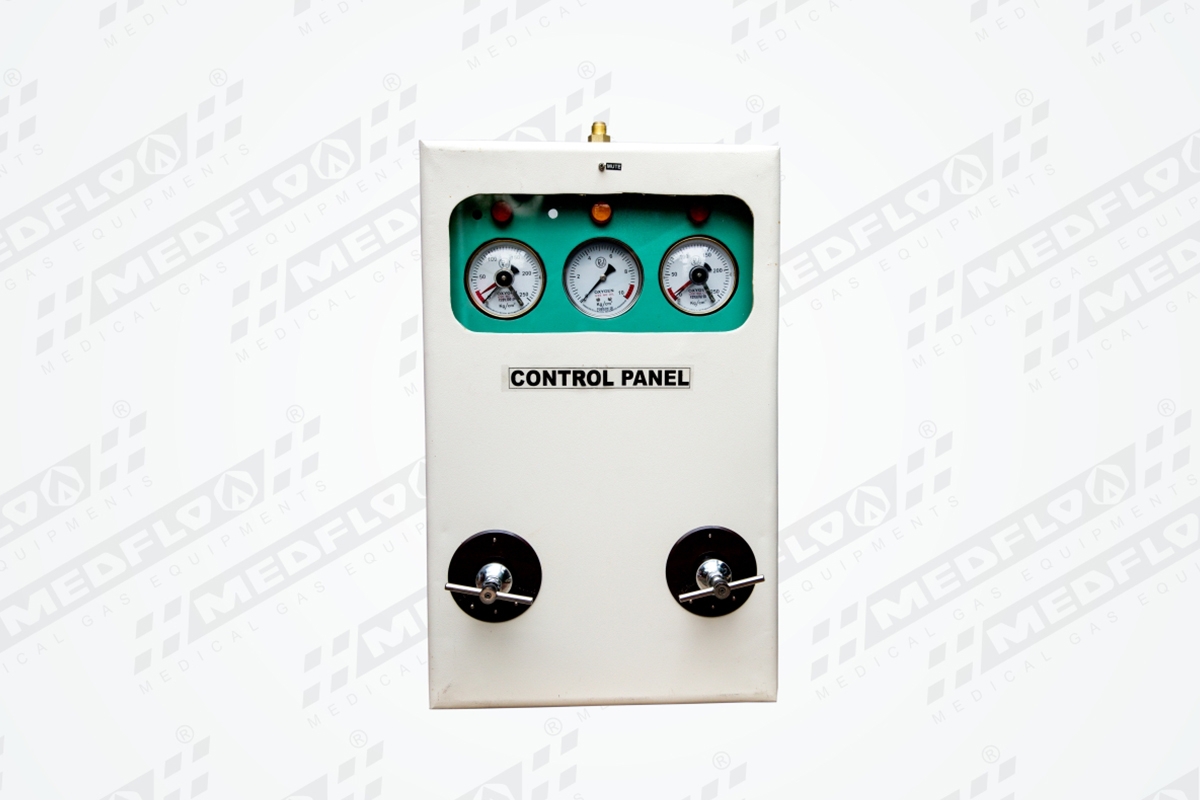
Oxygen Control Panel — Semi Automatic Medical Gas Changeover Systems
What Is an Oxygen Control Panel?
An Oxygen Control Panel is installed at the source equipment room of a hospital's Medical Gas Pipeline System (MGPS), between the oxygen manifold or cylinder bank and the pipeline that feeds outlets across the building. Its job is simple but critical: monitor the pressure coming from the primary oxygen source and give the plant room operator a clear way to bring the reserve bank online the moment the primary bank runs low — before pressure at the bedside or OT outlet ever drops. In a Semi Automatic Oxygen Control Panel, this monitoring is continuous and the changeover itself is a deliberate operator action, triggered by a visual and audible low-pressure alarm on the panel.
Randall Medical Technologies manufactures semi automatic oxygen control panels for hospitals, nursing homes, and diagnostic centres across India, sized and configured to match the facility's manifold layout — duplex, triplex, or larger bank configurations.
How the Semi Automatic Changeover Works
- Dual-stage pressure regulators bring cylinder or manifold pressure down to line pressure separately for the primary and reserve banks.
- Analog or digital gauges on the panel face display live pressure for both banks at all times.
- When the primary bank pressure falls below the set threshold, a visual indicator lights up and an audible alarm sounds at the panel (and at a remote alarm point, if fitted).
- The operator manually opens the reserve bank isolation valve and closes the depleted bank, transferring supply without any drop in downstream line pressure.
- A pressure relief valve protects the downstream pipeline from over-pressure during changeover.
This manual-trigger design is preferred in many Indian hospitals because it keeps a trained biomedical or facilities technician directly involved in every oxygen source changeover — a safety-critical event — rather than leaving it to an unattended automatic switch.
Key Features
- Dual-bank (primary + reserve) pressure monitoring with dedicated gauges for each line
- Visual + audible low-pressure alarm at the panel, with optional remote alarm output
- Manual isolation valves for controlled, deliberate bank changeover
- Wall-mounted stainless steel or powder-coated MS enclosure for plant-room environments
- Dual-stage line pressure regulators for stable downstream delivery
- Configurable for oxygen, nitrous oxide, medical air, or vacuum manifold changeover
- Panel sizing scaled to bed strength and average facility oxygen consumption
Technical Specifications
|
Parameter |
Specification |
|
Panel Type |
Semi Automatic Oxygen Control Panel (manual changeover, alarm-indicated) |
|
Gas Compatibility |
Medical Oxygen (configurable for N2O, Medical Air, Vacuum on request) |
|
Bank Configuration |
Duplex / Triplex / Custom multi-bank, based on facility requirement |
|
Inlet Connection |
1/2" BSP (F) standard, other sizes on request |
|
Pressure Display |
Analog or digital gauges, dual-bank readout |
|
Alarm System |
Visual + audible local alarm; remote alarm point optional |
|
Regulation Stage |
Dual-stage pressure regulation for stable outlet pressure |
|
Enclosure Material |
Stainless steel or powder-coated mild steel, wall-mounted |
|
Mounting |
Wall-mounted, plant room / source equipment room installation |
|
Standards Reference |
IS 7396, NFPA 99 (gas source changeover), HTM 02-01 guidance |
|
Customization |
Panel size, gauge range, and alarm configuration built to bed strength and manifold layout |
Standards & Compliance
Randall's oxygen control panels are engineered in line with IS 7396 (India's Medical Gas Pipeline Systems standard), the source changeover principles set out in NFPA 99, and design guidance referenced in HTM 02-01 for medical gas source equipment rooms. Compliance with these references helps hospitals meet NABH and NABL infrastructure expectations during accreditation audits.
Applications
- Hospital central oxygen plant / source equipment rooms
- Nursing homes and mid-sized healthcare facilities running manifold-fed oxygen systems
- ICU and OT complexes requiring uninterrupted oxygen backup
- New MGPS installations and retrofits of ageing manual changeover setups
- Diagnostic and daycare centres with duplex cylinder manifold systems
Why Choose Randall Medical Technologies
- Manufactured in-house at Randall's Coimbatore facility, with full quality control over regulators, gauges, and enclosures
- Panels engineered to match the hospital's actual manifold layout rather than a one-size-fits-all design
- Trusted by hospital administrators and biomedical engineers across South India
- Site assessment, installation, and commissioning support from Randall's technical team
- Annual Maintenance Contracts (AMC) to keep regulators, gauges, and alarms calibrated over the panel's service life
Installation & After-Sales Support
Randall's team assesses the source equipment room layout, existing manifold configuration, and oxygen consumption pattern before recommending a panel size and bank configuration. Installation includes pressure testing and commissioning against the facility's MGPS documentation, followed by an AMC option covering periodic calibration of gauges, regulators, and alarm circuits — the components that matter most for a changeover panel to perform reliably when it's actually needed.
Frequently Asked Questions
What is a Semi Automatic Oxygen Control Panel used for?
It is installed in the medical gas plant room to manage the changeover between the primary and reserve oxygen cylinder banks (or between manifold and central source). When the primary bank pressure drops below the set level, the operator manually switches to the reserve bank so that oxygen supply to wards, ICUs, and operation theatres is never interrupted.
What is the difference between a semi automatic and a fully automatic oxygen control panel?
A semi automatic panel signals a pressure drop through a visual/audible alarm and the operator switches the source manually, giving staff direct control over the changeover. A fully automatic panel switches sources on its own once the set pressure threshold is reached, without operator action. Many hospitals prefer semi automatic panels because they keep a trained technician in the loop for critical gas changeovers.
Which gases can this control panel handle?
Randall's semi automatic control panels are primarily configured for medical oxygen, and the same panel design can be adapted for nitrous oxide, medical air, and vacuum manifold changeover on request.
What standards do Randall's oxygen control panels comply with?
The panels are engineered to align with IS 7396 (Medical Gas Pipeline Systems), NFPA 99 gas source changeover requirements, and HTM 02-01 guidance followed by hospital planners for source equipment rooms.
Can the control panel be customized for hospital bed strength?
Yes. Panel size, gauge range, number of banks, and alarm configuration are customized based on the number of beds, average oxygen consumption, and whether the facility runs a duplex, triplex, or larger manifold setup.
Does Randall provide installation and AMC support?
Yes. Randall's technical team handles site assessment, panel installation, pressure testing, and commissioning, followed by scheduled Annual Maintenance Contracts (AMC) to keep gauges, regulators, and alarms calibrated.
Where are Randall's oxygen control panels manufactured?
They are manufactured at Randall Medical Technologies' facility in Coimbatore, Tamil Nadu, and supplied to hospitals, nursing homes, and healthcare infrastructure projects across India.